
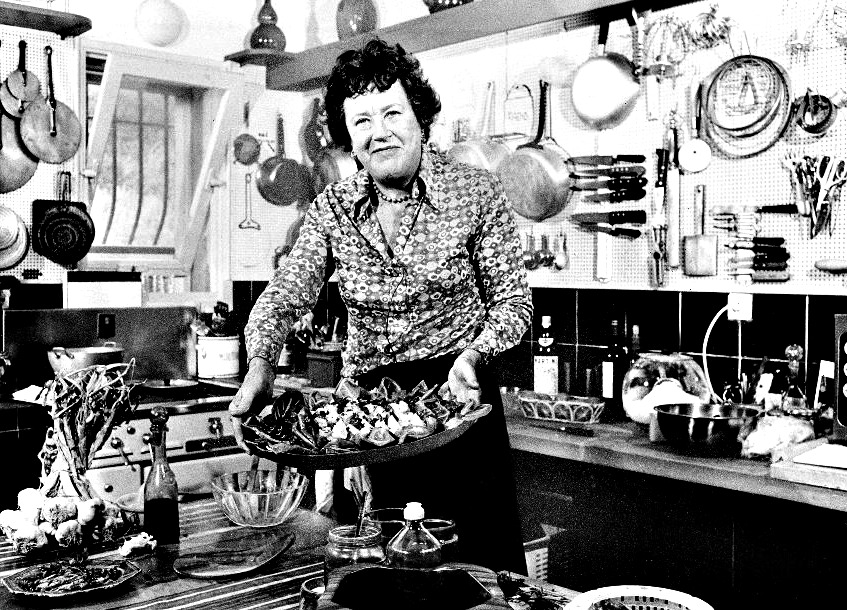
Photo credit:
Associated Press 1978 photo via
google images
I aspire to be a better cook!
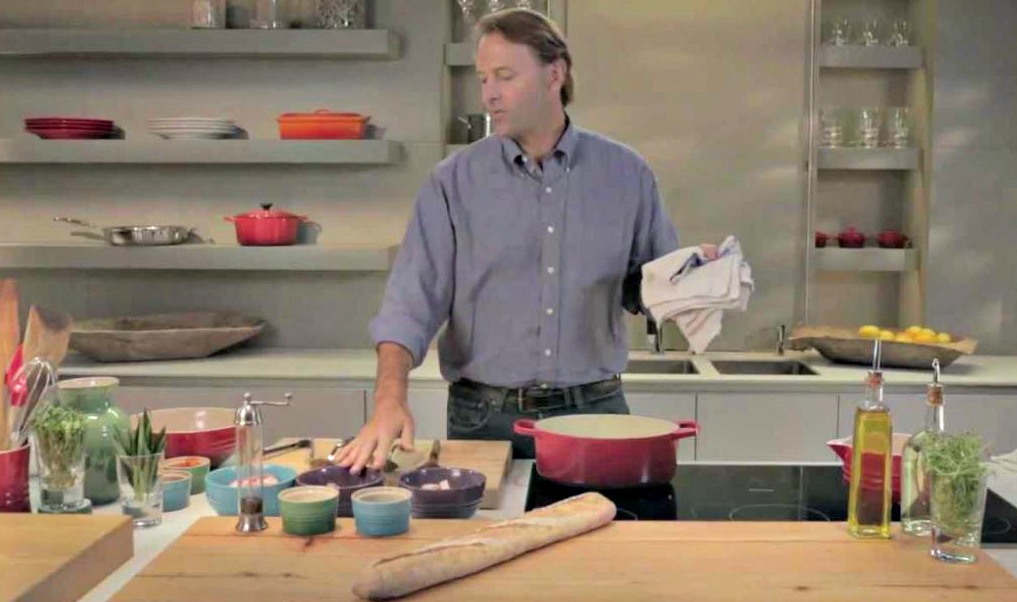
Michael Ruhlman
Photo credit: YouTube
Mise en place
According to Michael Ruhlman, in his book, Ruhlman’s Twenty:
“Mise en place translates literally to “put in place,” but what it really means is to “organize and prepare”. It means everything in its place, on your countertop, beside your stove, on your stove, and most critically, in your mind.”
This concept is used mainly for prepping in a restaurant. However, Ruhlman further states that “there’s no reason mise en place can’t work in a home kitchen as well. All you have to do is to decide to do it. Stop and think before you begin. The importance of it cannot be overstated. It doesn’t mean simply putting all your ingredients in ramekins next to your stove. It’s ultimately about thinking, organizing, and planning your course of action.”
I think most good chefs would agree.
A good place to begin becoming a better cook, wouldn’t you say?
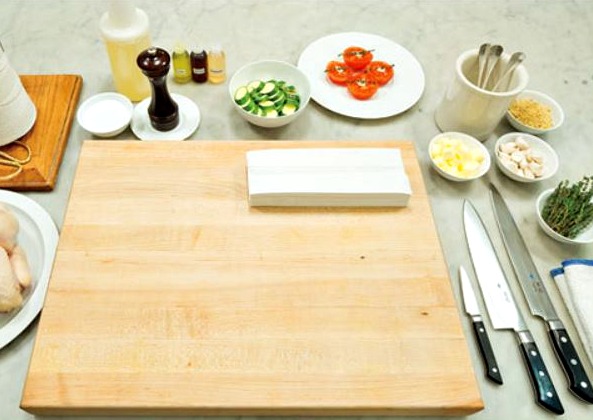
Photo source: http://www.bonappetit.com
For the past six months or so, I’ve been getting much of my food inspiration (cooking, tasting, eating out) from reading biographies about chefs. Here’s the firsts of my reviews, and the inspiration or things I learned from each of them. Maybe they will inspire you too!
–
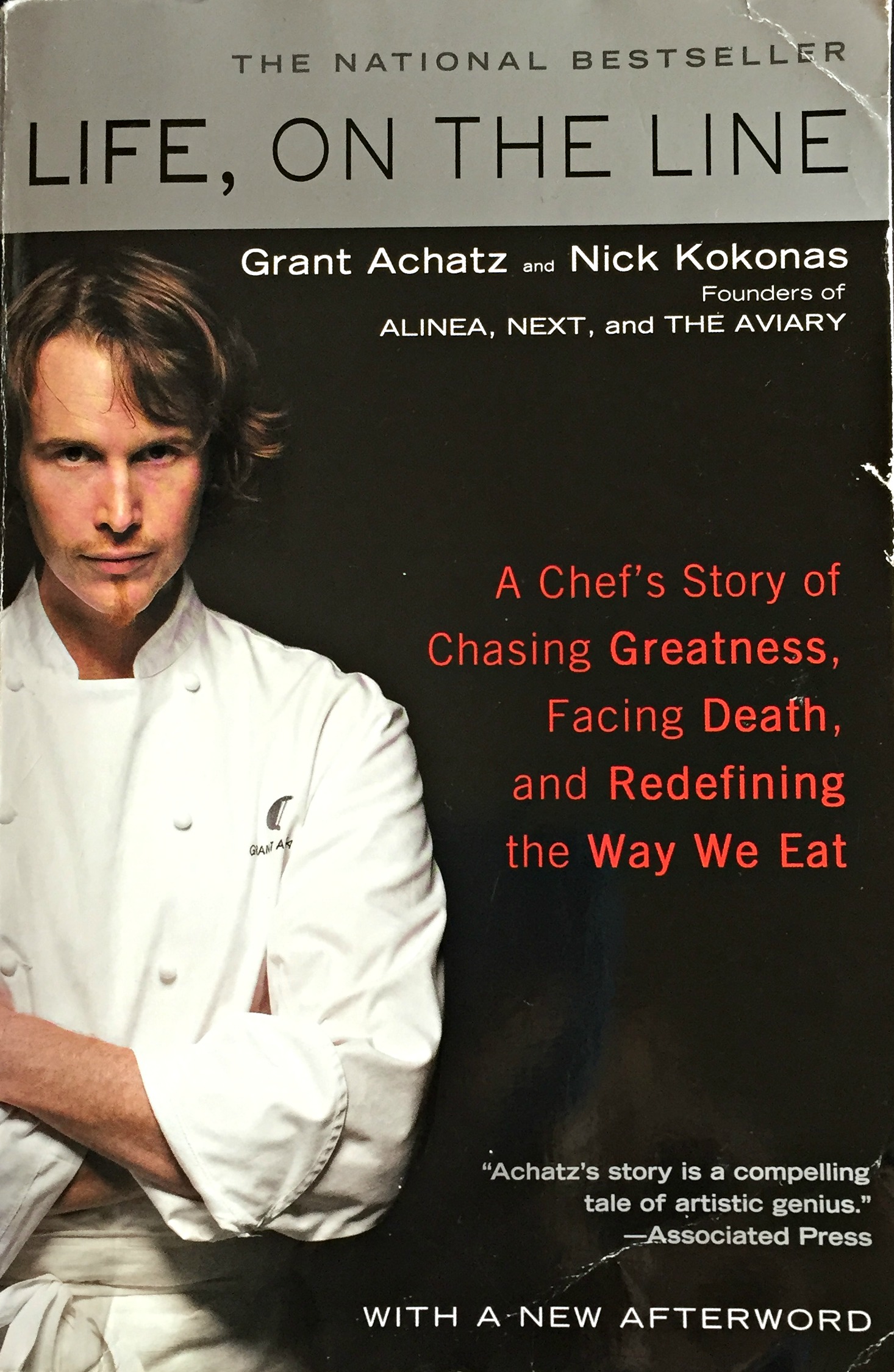
Several years ago, I read my first chef biography:
LIFE, ON THE LINE
by Grant Achatz and Nick Kokonas.
–
–
I happened to be browsing cookbooks at a Barnes & Noble, and this book caught my eye. Hailing from Chicago, I was already familiar with Grant Achatz. I was aware of the accolades associated with Chef Achatz, and his restaurant Alinea. I also knew he had been previously diagnosed with stage 4 cancer of the tongue (the sense of taste being vitally important to a chef), knew he had chosen a radical treatment for the cancer, and ultimately beat it. After flipping through the book, I knew that I wanted to purchase and read it.
I was smitten with this book from the first couple of pages: Achatz’s early introduction into the world of cooking by the age of five. I was captivated by his culinary journey including working at his family’s restaurant, attending the Culinary Institute of America, and working for his mentor, Thomas Keller, at the French Laundry Restaurant for 4 years.
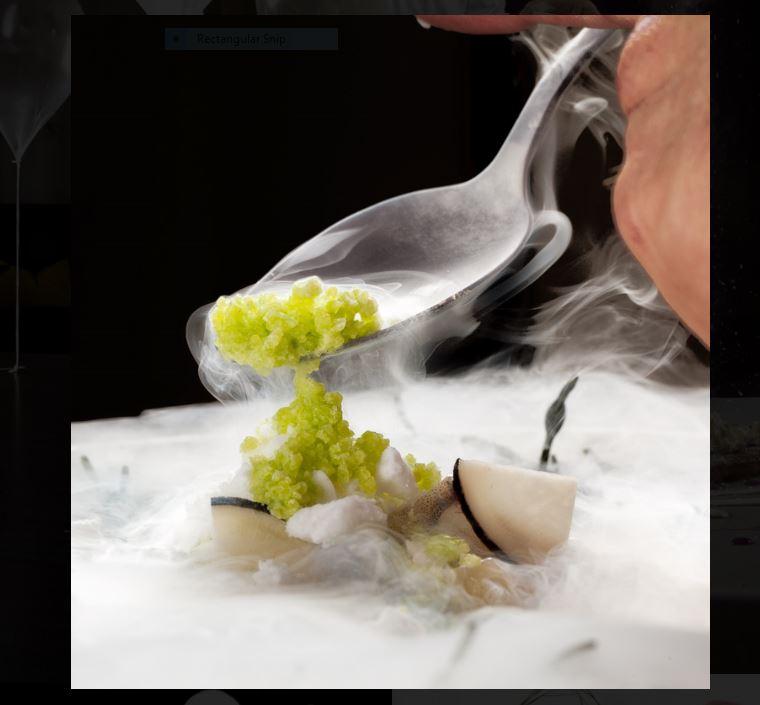
Alinea’s scallop, citrus aroma, fourteen textures
Photo source: Alinea Restaurant
A pivotal moment occurs for Achatz while working for Chef Keller. Keller arranges for Achatz to “stage” for Chef Ferran Adrià at elBulli Restaurant in Spain. (Stage essentially means briefly working without pay in another chef’s kitchen to learn from them.) It is there that Achatz is first introduced to Adrià’s deconstructed cooking (similar to molecular gastronomy). Achatz only stages for three days at elBulli, but goes back to California “reeling and immensely inspired” from the experience. It is only a short time after that, Achatz knows he needs to leave The French Laundry and find his own kitchen to run.
After leaving The French Laundry, Chef Achatz becomes Executive Chef at Trio in Chicago. It is while working there, he meets Nick Kokonas who dines at the restaurant often with his wife. Together Achatz and Kokonas go on to co-found and open the restaurant, Alinea.
Reading about Achatz’s battle to beat the cancer was also a compelling story.

Alinea’s edible helium balloon made of green apple taffy
Photo source: Alinea Restaurant
Special note: As of December 31, 2015, Chef Achatz closed Alinea for extensive renovations. In the meantime, he took his entire team to Madrid and Miami for 40 unique services.
–
Most Noteworthy Takeaways for Me From Reading this Book
I was truly inspired by Achatz’s drive to become a better chef at each step in his career. I even attempted (on a much simpler level) a couple of the gastronomic dishes Achatz details, and experiments with prior to opening Alinea. The book also inspired me to try to cook and experiment more with different flavors and ingredients.
Special Note: This book was the first time I heard of Chef Ferran Adrià and elBulli Restaurant. Since then, after reading other chef biographies and watching cooking shows, I now know he is considered one of the best chefs in the world, and one of the most creative and highly admired chefs.
Life on the Line also gave me great insight into Chef Thomas Keller – things like Keller’s constant pursuit of perfection, his passion for cooking, and taking the time to personally teach cooking techniques to his staff. I gained an appreciation of why The French Laundry continues to win accolades (and why it’s so expensive). It also motivated me to check out The French Laundry Cookbook. So that’s where I went next…
–
THE FRENCH LAUNDRY COOKBOOK
by Thomas Keller
–
Most Noteworthy Comments Made by Thomas Keller in this Cookbook That Stayed with Me
“Cooking is not about convenience and it’s not about shortcuts.”
“Take your time. Move slowly and deliberately and with great attention.”
Keller states his greatest hope in using his cookbook is that “you create something that you have deep respect and passion for.”
Keller’s law of diminishing returns: “basically means your initial bite into a dish is fabulous. Your second bite is great. However, by the third bite, and knowing there’s more of the same dish left to eat, the flavors begin to deaden in your mouth.” This is one of the reasons his restaurants serve tasting menus. (Makes sense to me)
“If a recipe’s difficulty exceeds your desire to make it, it’s ok – just make part of the recipe.”
“Trust your instinct.”
–
Have I made many of the recipes in The French Laundry Cookbook? No, but the book definitely made an impact on me to be more passionate, thoughtful, and embrace my time cooking in my kitchen, especially for other people.
I am now a huge fan of Chef Thomas Keller.
–
ON MY BUCKET LIST…
Eat at Alinea in Chicago
Eat at one or both of Thomas Keller’s restaurants: Per Se (New York City) or The French Laundry (Napa)
–
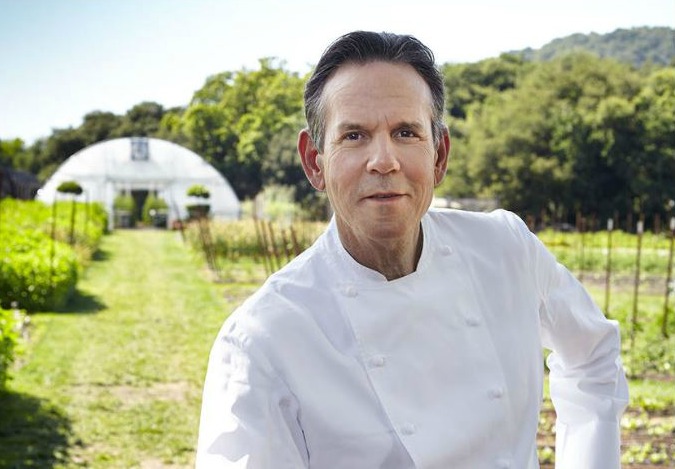
Photo source: thomaskeller.com






























































 Inspirational Details
Inspiring Reads for Inspired Cooks: Part II
Photo source: acappellabooks.com via google images
In the past six months or so, I have been getting much of my food inspiration (cooking, tasting, dining out) from reading chef biographies. Welcome to Part II of my reviews of the books, and the inspiration or things I learned from each of the biographies. If you missed Part 1, you can read here.
–
Sous Chef: 24 Hours on the Line
by Michael Gibney
I actually read this biography about 1 to 2 years ago. I wasn’t looking for chef biographies at the time. I just happened to be at my local library, and this book caught my eye on one of their displays.
First, a little background on the author. Michael Gibney was sixteen years old when he took his first job in a restaurant washing pots in an Irish pub. Thirty minutes into his job, a manager told Gibney that he needed him to clean up a customer’s vomit in the foyer of the restaurant. It was then Gibney decided he had to become a cook. By the age of 22, Gibney had his first sous chef position in a restaurant. (Source: Sous Chef book) Now on to the book…
This book was a fast, fun read (especially for a foodie).
Gibney takes the reader through a typical day (24 hours) in the life of a sous chef in a fast-paced New York City restaurant. The book is written in the second-person narrative. I found the narrative to be a little weird at first, but I get why Gibney wrote it this way. It was actually very creative. By doing this, Gibney puts you into the role of the sous chef in the restaurant’s kitchen, and wants to make the experience more intimate. By doing this, you’re supposed to feel the adrenaline rush, pressure, but also the pleasure that comes with working in a restaurant kitchen.
“You’re second in command just below the chef.”
The words sous chef come from the French meaning “under chef”.
–
Kitchen Chain of Command
Source: Sous Chef Book
I never saw a “restaurant kitchen diagram” like this one before. I found it to be a good reference for the book and still today for a typical restaurant kitchen staff and the hierarchy of it.
The book gives a great glimpse into the workings of a restaurant kitchen and the interaction between all the staff and the roles each of them have.
Gibney begins the book with the sous chef showing up to work first thing in the morning – the kitchen is clean and more importantly, quiet. In between his cigarette breaks, the day goes on and becomes more frenzied and stressful for the sous chef. Throughout the book, Gibney gives a vivid and detailed description of the preparation of certain dishes needed for the day’s menu like filleting the monkfish and cleaning the foie gras.
The day finally ends with the “clean down” of the kitchen, and discussion of the prep lists needed for the next day’s menu. After changing clothes, some of the cooks head out for a night of heavy drinking at favorite NYC bars in the area. And then the blare of the alarm clock the next morning comes much too quickly…
Some Noteworthy Takeaways for Me From This Book
“A cook/chef’s knife kit represents everything they are as a cook and a chef. Not only does it contain all the tools they need to perform the job, but its contents demonstrate their level of dedication to their career… The knives themselves tell how much the job of cooking means to them. A dull knife damages food. Chefs are there to enhance the food. Extremely sharp knives are essential for this purpose.”
“A good cook almost never misses a shift. He takes ownership of his work; he takes pride in it. He understands how important he is to the team and he will avoid disappointing his coworkers at all costs.”
Gibney includes several pages of “Selected Kitchen Terminology” at the end of the book. He provides many cooking/chef terms and the definition of each of them. Some of them are pretty well-known like à la carte, bistro, cuisine, and risotto. Many of them, though, less so such as:
boudin blanc – a pork-based “pudding-style” sausage which typically contains liver, heart, milk, and sometimes eggs and other ingredients
entremetier – a vegetable cook
pommes fondant – a dish of potatoes cooked in stock (usually animal based) and butter
temper – to slowly introduce (food) to heat or warmth without actually cooking: “to avoid scrambling the custard, you must first temper the eggs by slowly drizzling in the hot milk, whisking constantly”
(Source: Sous Chef)
–
Kitchen Confidential: Adventures in the Culinary Underbelly
by Anthony Bourdain
Once I got past Bourdain’s potty mouth and his descriptions of the “sex, drugs, and rock ‘n roll” that occur in a restaurant kitchen, I actually liked this book and came away from it with some useful tips about dining in restaurants.
Bourdain states in his book that his cooking life has been a long love affair. His love of food began at the young age of ten when his family traveled to France, and Bourdain experienced many new foods for the first time. For many years now, Bourdain believes good food/ good eating is all about taking risks and is an adventure. I would have to agree there is much truth to that.
Bourdain shares “the good, the bad and the ugly” about the restaurant business in his book. I found some of the information to be useful for me – the diner in a restaurant…
Most Noteworthy Takeaways for Me From This Book (all suggestions/statements from Kitchen Confidential)
Bourdain writes, “I never order fish (in a restaurant) on Mondays unless I’m eating at Le Bernardin – a four-star restaurant where I know they are buying their fish directly from the source. I know how old most seafood is on Monday – about four to five days old!”
“At a fine restaurant, the chef places a large order for his fish on Thursday for a Friday morning delivery. The next fish delivery is not coming till Monday. The chef is hoping to sell most of the fish on Friday and Saturday night. He then is hoping to unload his leftover fish on Sunday in a seafood salad for brunch, or as a ‘special’ on Sunday or Monday night.” Diners beware the word, “Special”…
If you saw the movie, The Big Short, Anthony Bourdain had a cameo in it describing the above concept, and comparing it to a collateral debt obligation.
Photo source: YouTube
via google
“Never order a hollandaise sauce at a brunch. Bacteria love hollandaise. Hollandaise is a veritable petri-dish of biohazards.” “Also cooks hate brunch. A wise chef employs his best line cooks on Friday and Saturday nights, and will be reluctant to schedule them again for Sunday brunch especially since they went out after work and got hammered.”
“I won’t eat in a restaurant with filthy bathrooms. They let you see the bathrooms. If they can’t be bothered to keep their bathrooms clean, just imagine how their refrigeration and work spaces look like. Bathrooms are relatively easy to keep clean. Kitchens are not.”
“Shrimp? All right, if it looks fresh, smells fresh, and the restaurant is busy, guaranteeing turnover of product on a regular basis. But I’ll pass on the shrimp toast. If I walk into an empty dining room, and the owner staring out the window, I’m not ordering the shrimp. The same principle applies to anything on a menu actually, especially something esoteric and adventurous like bouillabaisse. The key is rotation. If the restaurant is busy, and you see bouillabaisse flying out the kitchen doors every few minutes, then it’s probably a good bet.”
“Look at your waiter’s face. He knows. It’s another reason to be polite to your waiter: he could save your life with a raised eyebrow or sigh.”
Yes, some of this is common sense, but it sure makes me think a little more each time I’m walking into a new or unknown restaurant.
–
*****************
President George W. Bush awards the Presidential Medal of Freedom to Harper Lee in 2007
Source: google
–
On February 19, 2016, we lost beloved author, Nelle Harper Lee. To Kill a Mockingbird was, and still remains one of my favorite books.
Harper Lee, Rest in Peace…
Source: google
Share this: